ULYANA SHTYBEL: “UKRAINE REMAINS THE COUNTRY OF UNLIMITED POTENTIAL”

Exclusive interview of Executive Director of Representative Office of Warsaw Stock Exchange in Ukraine to StockWorld
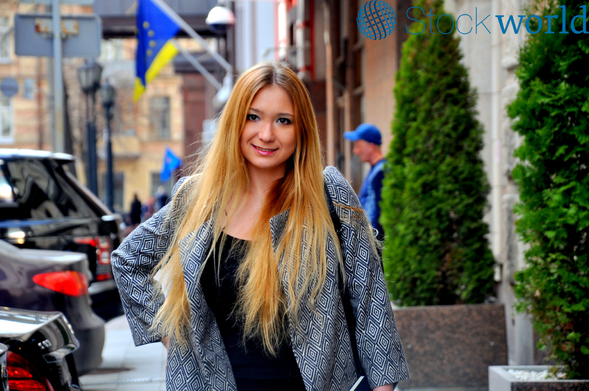
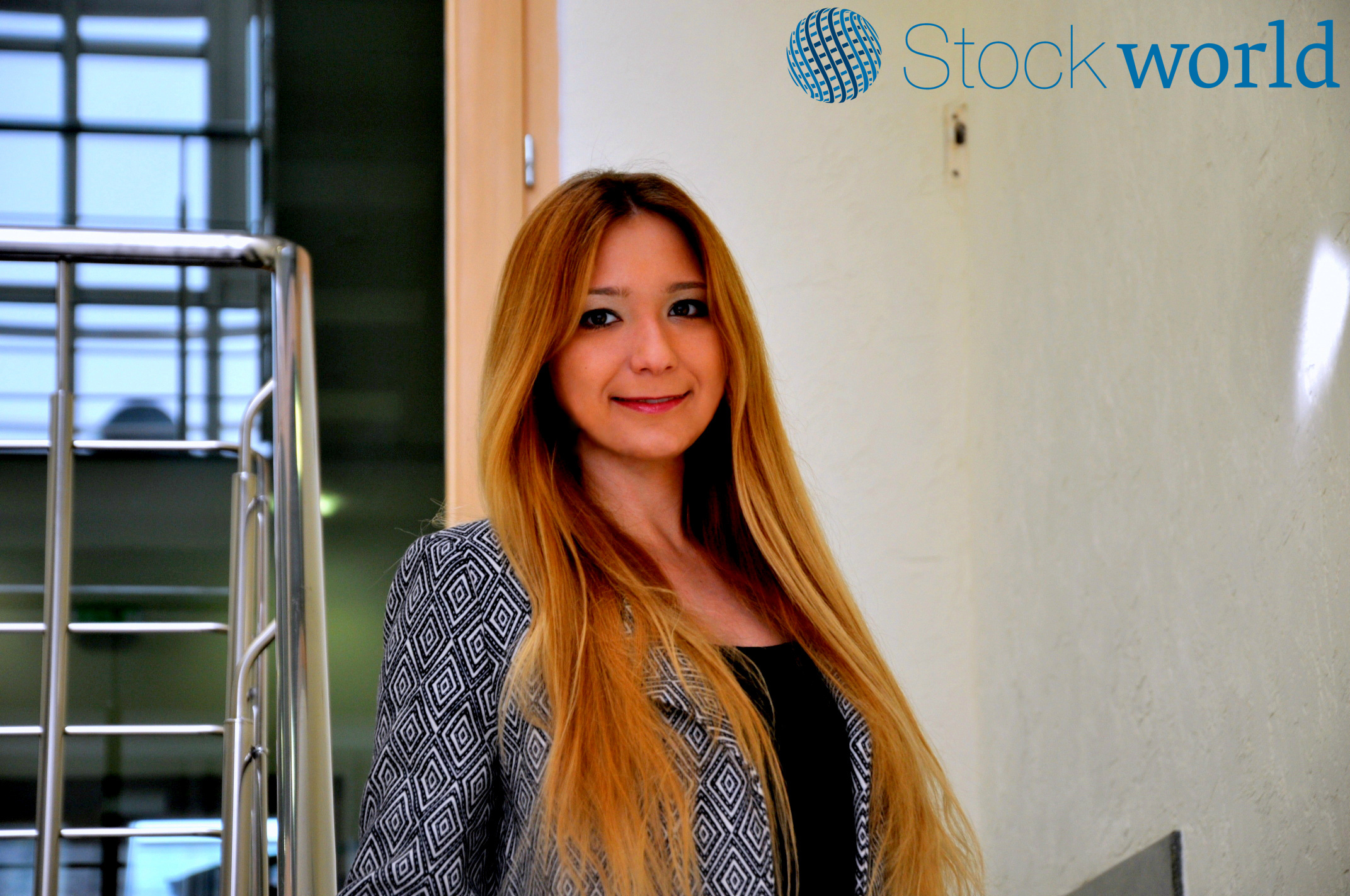
… Looking at Ulyana you can hardly believe that she graduated from Lviv National University by the name of Ivan Franko as Master in Banking and Ph.D in Economics in her young age. Her portfolio accounts for job in Alfa Bank, active citizenship including at international level, an internship at the United Nations, and active promotion of financial sector reforms in the role of coordinator of Banking and Financial Services Committee at the American Chamber of Commerce in Ukraine, and later also as coordinator of the Forum of Leading International Financial Institutions. In February 2016, she was appointed to the position of Executive Director in Warsaw Stock Exchange Representative Office in Ukraine. Ulyana tells us about her intense schedule, but she also emphasizes that she likes such a rhythm of life. She’s always smiling and answers all our questions. What does she think about investment capacity of Ukrainian companies, Ukrainian stock market ticket to success and her plans as the head of the Platform’s Representative Office in Kyiv? Read in our text.
StockWorld: The last IPO of Ukrainian companies took place on Warsaw Stock Exchange in August 2012. What is your assessment of these steps made by local enterprises including for the purposes of Ukraine’s image building up in the international investment arena?
Ulyana Shtybel: It’s true, after 2012, Ukrainian companies carried out neither IPOs nor SPOs. There are several reasons for this. I’m talking about liquidity and favorable conditions to use debt capital, in particular, relatively cheap foreign currency lending in 2012 – 2013. Also, we could observe reorientation from IPO to active raising of funds at the cost of debt instruments on stock market. Myronivsky Hliboproduct (MHP), Ukrlandfarming and agriholding Mriya placed their Eurobonds. In such conditions Ukrainian companies considered comparatively low costs and timing of the process itself. Moreover, western stock exchanges were congested with Ukrainian agricompanies. The latter in their turn, required more time to prepare company for IPO, especially, when the pioneers’ experience showed that IPO wasn’t the one-off transaction or exam which one can forgot after having passed through, but it was a change in business vision, procedures, corporate governance, and transformation into development-oriented company which executes declared plans. Ukrainian companies in virtue of their associating with macro economy and political situation in the country shall demonstrate they are the best companies and not just good ones. In their turn, these additional challenges are capitalized into possibilities of stable growth if based on effective governance. In any case Ukrainians always have to work twice harder to reach success in international environment.
Thus, 12 of 19 Ukrainian companies which carried out IPO on western stock exchanges in a period from 2006 till 2012, demonstrated decrease in quotations,. Astarta and Kernel which are listed on WSE, successfully doubled their cap and retained their positions and investors’ confidence with light decrease in a very hard Ukrainian realities in 2014. This statistics of Ukrainian companies and success stories of Astarta, Kernel and also Ovostar on WSE and МНРon London Stock Exchange shall motivate Ukrainian business, as IPO says about maturity of the company which foresees “bonuses for professional growth” along with the publicity and additional responsibilities.
SW: When do you expect following IPO of Ukrainian companies on Warsaw Stock Exchange? You might know some companies, which are going to carry out placement.
US: If your talent is given by the nature, you can’t escape from it. It happens with Ukraine. There are no such obstacles in the world which cease Ukraine being the country of unlimited potential. Realization of this potential of Ukrainian companies is awaited by Polish and international investors. While small and middle business together with start-ups are proving resiliency of their ideas and testing chosen business models, big business uses time to get out stronger from the crisis and acquire more technological and production capacities, loyal clients, credibility and positive reputation, formed transparent structure of the company, effective corporate governance, attractive credit and investment history, business-plan, comprehensive financial reporting in accordance with the IFRS and audit of financial results. We see the companies in Ukraine, which are already aimed to become successful, innovative and competitive in long term period, they are: SoftServe, GlobalLogic, Ciklum, Allseeds, Nova Poshta, Kyivstar, Nibulon, state Oschadbank, etc. Also, companies from agricultural, IT and telecommunications, pharma and bioengineering sectors demonstrate positive dynamics in expanding their capacities, new marketing directions, modernization and technological development. The perspective of Ukrainian IPOs which is set-aside for two-five years doesn’t change the fact that it’s the best way for most of the companies to attract capital as the most interesting in terms of long-term finances and reputation. That’s why, even in conditions of instability, companies continue preparing for IPOs, and Ukrainian companies which proved their resilience in hard times and readiness for gradual growth could be surely interesting for investors.
SW: Do you think the scandals related to data manipulation and reporting submission which took place some years ago, could influence attitude to Ukrainian companies?
US: The requirements to confirm reporting, credit ratings, economic viability of operations are strengthening not only in Ukraine but also in developed economies in order to fight against unhealthy speculative, risk and fictitious instruments in banking sphere and on stock market after crisis in 2008. Transformations are taking place not only in Ukrainian economy but the world market economy is also evolving, and it’s the reason why fewer and fewer investors are ready to take long-term instability risks with purpose gain one-off financial benefits. Low level of confidence to the management of Ukrainian companies and lack of confidence to preventive effectiveness of regulators and judicial authorities put investor at disadvantage while selecting the object of investments in Ukraine and vest verification and investigation functions upon him that is not typical in western jurisdictions. Unfortunately, nowadays exploded confidence mandate makes difficult for Ukrainian companies to manage their reputation and communications with western mass media, investors, and often the only way out is attraction of debt and equity capital from international financial institutions (EBRD, IFC, OPIC, etc.) as stamp of quality and reliability of the enterprise.
SW: Can you tell us which sector representatives are interesting for investors in WSE?
US: Investors want better understanding of Ukrainian companies’ business and operations. Not every investor is ready to come to Ukraine. However, there are those who are ready to hear and assess Ukrainian companies that visiting road-show in Poland, European countries, Scandinavia and USA. As for the moment many investors are limited or even banned to invest in Ukraine. That’s why Ukrainian companies are attracting attention of some individual investors and private funds which select companies basing on attractiveness of the economic business model, proven reputation of the management and stable future cash flow that has less dependence on internal factors (devaluation, domestic purchasing power , territorial risks and state regulation of the industry). Typically these are export oriented companies. Consequently, agricultural, pharma and IT sectors remain attractive for investors.
SW: Recently our portal has written about the results of WSE in the latest “working year”. We saw increase in all the spheres. Could you, please, name us the drivers of such phenomenon?
US: Poland remains the most active GDP growth country in Europe, and Polish open pension funds (OFE) are active participants of stock market together with increasing number of foreign and individual investors. In 2015, international IPO market increased at the account of IPOs of industrial companies and companies from IT, health, financial and fintech sectors in USA and China. In 2015, WSE showed got the following results:
- More than 22 bil PLN value of trade in shares generated by new clients;
- WSE Main Market’s IPO sustained strong acquisition of issuers – 30 issuers (28 in 2014), 13 of such companies came from NewConnect, the biggest are Uniwheels (IPO – 504 mil PLN) and Pfleiderer Grajewo (SPO – 561 mil PLN);
- 23 new non-Treasury bond issues were carried out on WSE Catalyst, which totally amounted to 5.1 bil PLN.
Factors of growth also were creation of additional trading advantages on derivatives market and development of commodities market on WSE: liquidity of electricity market was 138 % (it’s the third biggest market after German/Austrian and Scandinavian); liquidity of natural gas market was 62 % (it’s also the third market in Europe after UK and Netherlands); also the growth was demonstrated in volume of trade in resources’ property right.
As to the results of 2015, WSE remains the third stock exchange in Central and Eastern Europe in terms of total listed companies cap and volume of shares trading after Moscow Exchange and Borsa Istanbul, and it’s still the first stock exchange by the number of listed companies, namely, 905 companies which shares are traded on WSE Main Market and NewConnect. Poland also remains the hub for development of small and middle business, in particular, 95 % of companies listed on WSE has cap amounted to less than $500 mil. It’s due to alternative platform for private shares placement on WSE – NewConnect, where the entering requirements are minimal and the same relates to trading through Alternative Trading System.
SW: At the same time we’ve published the results of Ukrainian stock market. It demonstrated a decrease as all other segments. Could you, please, tell why Kyiv platforms still far from our neighbours and their previous results?
US: Ukrainian equity market can’t be successful now, firstly, because of absence of investors. This market could be rather named a fiction in conditions of no adequate listing procedure, absence of strong issuers, investment activity and capital to raise. Despite of potential in macroeconomic stabilization, renewal of economic growth and privatization of state enterprises, Ukrainian market is still fragmented and has no integrity. That’s why the market recognizes a need in consolidation of all stock platforms in Ukraine, at that, there is no single scenario accepted by everyone and it’s hardly to appear as the Strategy for reforming financial sector approved by the National Reforms Council doesn’t provide the format of consolidation. And participation of international financial institutions in this process is not declared at the moment.
Taking into account important role of NSSMC and indirectly the role of stock exchange as stock market regulator it’s reasonable to consider the scenario of consolidation in Ukraine where the state is a shareholder and regulator is represented in the Board of consolidated stock platform. It works for Poland, where WSE is a public company and 65 % of its shares are listed and owned by minority shareholders, and 35 % of privileged voting shares are owned by the State Treasury of Poland. Optimal ownership structure in consolidated stock exchange shall provide balance of investment interests of different groups (minority shareholders) and strategic and preventive role of the state in order to create effective Ukrainian market which could meet needs for the government and corporate bonds, shares and derivatives trading.
SW: Polish stock market is often held up as an example to local one. It’s a kind of dream and unattainable example at the same time. Could you, please, tell us why Ukrainian market can’t become the Polish one?
US: The answer is in the process of market transformation which already accounts for 25 years. Over this period of time, oligarchic groups and corruption became stronger, there is still no reliable institute of ownership right, protection of investors’ rights and justice in courts. Intensive market transformation started in Poland in 1989 and was developing via gradual realization of market principles. I mean demonopolization, privatization, effective corporate governance of state owned enterprises, introduction of the second pillar of pension provision through private funds, delegation of other state functions to the businesses, strengthening of individual responsibility and enforcement. All of these are the preconditions of stock market development in Ukraine. Homework in this direction is done by progressive representatives of state authorities, international organizations and business associations, but still the “window of opportunities” which was opened for technocratic government of Leszek Balcerowicz in Poland, is yet closed in Ukraine.
SW: However, regardless such “regret” “if stars are lit it means — there is someone who needs it”. Accordingly, the Representative Office of WSE can’t work without aims in Kyiv. What are your tasks for this year?
US: I’ve already mentioned the investors who keep a finger on the pulse of potential of Ukraine. So, Ukraine is always a partner for WSE and I set myself an aim to support and develop this partnership with all stakeholders:
- With existent and potential issuers of shares for shares and bonds IPOs and SPOs on WSE including private placement and development of SME of Ukraine; and dual listing between Poland and Ukraine, Poland and leading world stock exchanges;
- With regulators of stock and financial markets for qualified advice on stock market infrastructure development and capital market instruments in Ukraine;
- With international financial institutions which WSE could form an effective tandem with to support transparent privatization and implementation of corporate governance in Ukraine.
On the basis of patriotic and professional considerations it’s important for me to share knowledge and experience with purpose to make more companies understand procedures, requirements and business planning to launch IPOs, and more people to understand mechanisms of market economy to promote intensive growth of innovative entrepreneurs and retail investors in Ukraine.
SW: What are the aims you set for yourself at new position – personal as well as professional? How and when are you going to perform them?
US: I used to work in a very dynamic environment. My personal need in dynamics and keen to implement the best international experience in Ukraine was key reasons of my decision to move from Lviv to Kyiv in March 2014 and lead the work of the Banking and Financial Committee of the American Chamber of Commerce taking into account my huge experience in NGO sector, banking and Department of Economic and Social policy at the UN (New York). I continue supporting some legislative initiatives, which I started earlier, and also I have some personal projects related to promotion of market economy literacy that are also in implementation phase. Working at WSE I plan to join organization of selected investment conferences in Ukraine, carry out road-show for Ukrainian companies in Poland and make them participants of Warsaw Capital Market Summit in 2016. I continue sharing my experience on different occasions and presenting on IPO for participants of МВА kmbs specifically. Also, I have a hopes, in 2017-2018, to make next Ukrainian company’s debut on WSE and provide Ukrainian government with practical advices and support, including during the process of partial privatization of state banks by 2018 as declared andthereafter with regards to IPO of Oschadbank shares (based on successful example of the IPO of the biggest bank in Poland – PKO Bank Polski in 2004).
Source: StockWorld