“WE ARE DIFFERENT. WE ARE EQUAL”: ON GENDER DISCRIMINATION IN SWEDEN

Gender equality is a self goal. It is the precondition for poverty reduction, sustainable development and implementation of good governance in any country.
UN General Secretary Kofi Annan, 2003
Gender policy plays an important role in ensuring social harmony in society, ensuring social security, and demonstrates the standard of civility. Any negative attitude towards gender leads to imbalance of the social relations, internal negative processes in specific social groups or society as a whole. Gender inequality is one of the manifestations of socio-economic differentiation of the population, which leads to different possibilities of self-realization of women and men in society.
During the last decades a gender issue is a pressing problem which is constantly in the spotlight of the European Community, it forms the gender-legal space, taking into account the gender aspect of the country that acceding to it. The notion of international legal aspects of gender legislation in the European continent contributes to it, where is summarized the requirements of relevant changes.
In connection with the declaration of Ukraine’s course towards integration into the European Union, the gender issue is of particular importance in the political process of our country. Compliance with gender standards is not only a vivid indicator of the democratization of society, but also a prerequisite for entry into the European Community.
Ukraine’s current public administration is aimed at achieving gender equality in society, to combat all forms of discrimination, the creation of the necessary social and political conditions for the most complete implementation of the natural abilities of women and men in all areas of labor, social and personal life. At the core of this policy is – the generally accepted international norms enshrined in the Universal Declaration of Human Rights, the Convention on the Elimination of All Forms of Fourth World Conference on Women, the outcomes of the UN General Assembly and other documents.
Since the gender equality is one of the priorities of European policy at the moment there are already many models for achieving gender equality. One of the most successful and well-known example is Sweden – one of the internationally recognized gender-egalitarian leaders. According to the rating of gender equality, in which the World Economic Forum was studied data from 135 countries, Sweden in 2015 took the 4th place. Ukraine in the same ranking took only 67. Gender equality is one of the cornerstones of Swedish society. It means that men and women have equal rights and duties in all areas of life. They have equal opportunities to work and support themselves, combining a career with family life and do not have fear of abuse and violence by members of the opposite sex.
Swedish feminism during its more than a century history had transformed from the idea of a special female (parent) mission in the public sphere to the concept of equal social roles of men and women in society. In this way it demonstrated its commitment to the Western tradition, based on the recognition of the benefits of the public sphere of the private. The gender equality in Sweden achieved by further transfer functions of the family in the public sphere narrowing and leveling the private sector, reducing its social value and social function.
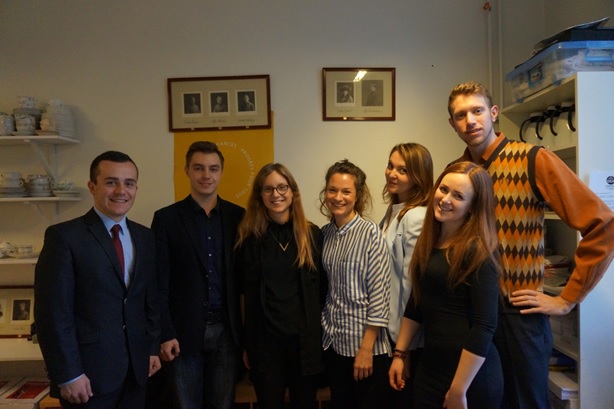
With the representatives of ALL WOMAN`S LOBBY
(Central coordinating institution of Swedish gender organizations)
Feminism has changed the look and essence of Swedish society, facilitating the entry of women economic independence, final approval of the model family with two employees, more equal division of responsibilities in marriage, increased participation of parents in the upbringing of children. Model of Nordic gender policy – is equality, owelty, equal rights and equal access to power. These principles are implemented in the demographic policy of Sweden.
The main idea which leads in the recent changes of Convention on the rights of persons with family responsibilities of Sweden is the idea that both parents have the maximum possible much time to spend with their children, including the childhood. Time to communicate with children, allocated as guarantees for parents to be divided between them. It will facilitate to eliminate gender stereotypes which exclude parents from the parenting process. Vocations, under the law, are not provided by the employer, but by the social insurance system. According to the law on parental leave, leave may be granted to a person who has parental insurance. Insurance based on a holiday for the day, on the half day, by a quarter and one-eighth of the day.
In Sweden, parents granted paid leave period of 480 days for the birth or adoption of a child, 60 vacation days fixed individually by each parent. In other words, the transfer of this part of vocation one parent to another is not allowed. This measure was introduced in view of the fact that, as a rule, parents who have a higher income, without taking leave to care for a child (his mothers optional part) due to lower income of the family. State intervention in the distribution of vocation between parents gives the family a choice: either to lose 60 days of vacation or father still will use it. Besides, the developed system of law, state establishes social support for people with family responsibilities who are involved parents at an early stage before or after birth. One of these forms of support for fatherhood and parenthood are educational groups for parents. About 60% of parents in Sweden are involved in such groups. It facilitates the reorientation of gender stereotypes that taking care of children is – exclusively female occupation.
Sweden public administration is aimed at creating economic independence of women in marriage – every woman has a real possibility of earnings. The success of the policy is confirmed by statistics: in 2007 women were a half of the Swedish labor force. But the problem of gender discrimination at work is still not resolved until the end. In Sweden, as well as in other countries, there are sectors of the economy, which dominates the work of men or women labor. There are male and female professions. While male professions are better paid. The number of women workers in the public sector equals the number of women in the private sector. Regarding the men, proportion is 18 and 82% respectively.
A significant role in the struggle for gender equality plays legislation. Swedish anti-discrimination legislation does not have a very long history. The origins comes from 1980 when was adopted the first anti-discrimination law, which was aimed at achieving equality between men and women. The law banned sex discrimination and introduced the post of Commissioner for Equal Opportunities as the supervisory authority. This regulation in 1992 was replaced by the Law on equal opportunities for men and women in the workplace.
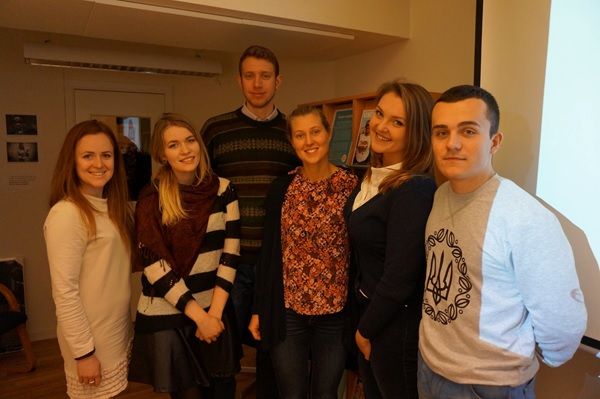
Anna, the head of Roks
(The Swedish Association of Women’s Shelters and Young Women’s Empowerment Centres )
Until 2009 in Sweden acted 5 major regulations that prohibit discrimination in labor relations: The law on equal opportunities for men and women in the workplace (1991); The law prohibiting ethnic discrimination (1999); The law prohibits discrimination against the disabled (1999); The law prohibits discrimination based on sexual orientation (1999); The law prohibits discrimination partly – employed workers and employees working on fixed-term contracts (2002). In Sweden, were accepted 3 no employment anti-discrimination laws. The first defended the students and graduates of higher education. The second was aimed at combating discrimination in the field of organization and business membership, participation and membership in organizations of employers, workers and professional organizations in the field of professional supply of goods, services in the area of housing, social services, social security, unemployment benefit, health care, medical care. The third law was banning discrimination and other unequal treatment for children and students.
From the first of January 2009 came into force a new act of discrimination. He was replaced by anti-discrimination laws in Sweden, combining them into a single regulation, further forbade discrimination on the criterion of age and sexual identity. Also was introduced the post of the only ombudsman , which monitors the implementation of the new law. As a result of the prohibition the discrimination extended to the following reasons: gender identity or expression, atypical for a particular sex, national origin, religion or belief, limited, sexual orientation, age. The law protects against discrimination in employment, in higher education, at school, in trade, health care and other areas. The commissioner in combat of discrimination oversees compliance with the principles of gender equality in the workplace, in the school system and in some other areas, particularly the labor market.
The Act contains two main parts relating to gender equality in labor relations. Firstly, the law commits all employers to take active and targeted measures to achieve equality between men and women. Secondly, it prohibits discrimination and requires the employer to investigate and prevent all cases of harassment.
Every employer who has the personnel more than 25 workers is required every three years to make a plan to achieve gender equality in the enterprise. Previously, the Act on equal opportunities for men and women at work required annual compilation of similar nature, including employers, with 10 to 24 employees. The plan should include the working conditions and terms of employment which employer intends to improve in line with the policy of gender equality and measures to be taken to achieve equal pay for equal work by men and women in the company. Employers are obliged to make a gender analysis of remuneration in the enterprise every three years (previously every year) and identify cases of irregularities. The system existed in Sweden since 1994 and, in practice, gives effective results.
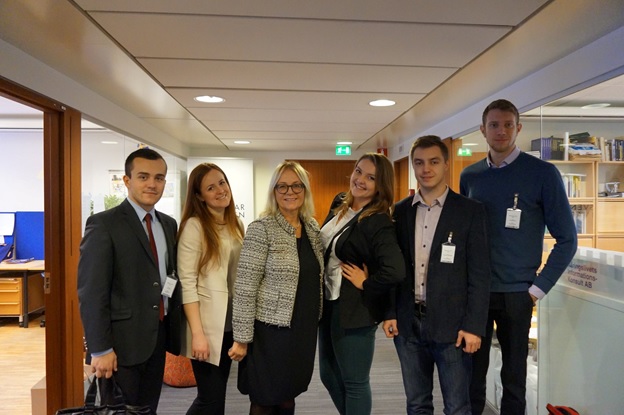
Monica Renstig, executive director of the Research Institute of Women in Business
In Sweden, the system of analysis is well-developed. Collection, analysis and presentation of official statistics of Sweden are carried out on the basis of gender. In quantitative terms, the principle of gender equality is reflected in the equal representation of men and women (50/50) in all areas of society. The qualitative aspect of gender equality means active use of knowledge and experience of both sexes to make progress in all areas of public life.
Sweden’s policy is aimed at achieving gender equality, undoubtedly, is systemic and effective. Competent approach to equality from the standpoint of uniformity of rights, opportunities and responsibilities of women and men in all spheres of life, and developed anti-discrimination laws and systematic monitoring of the state by employers’ efforts to eradicate inequality in enterprises gives tangible effect, bringing Sweden into the lead by indicator of gender equality state.
 Victoriia Zinchuk
Participant of the Program “Young Generation will Change Ukraine”,
Sweden, 2015